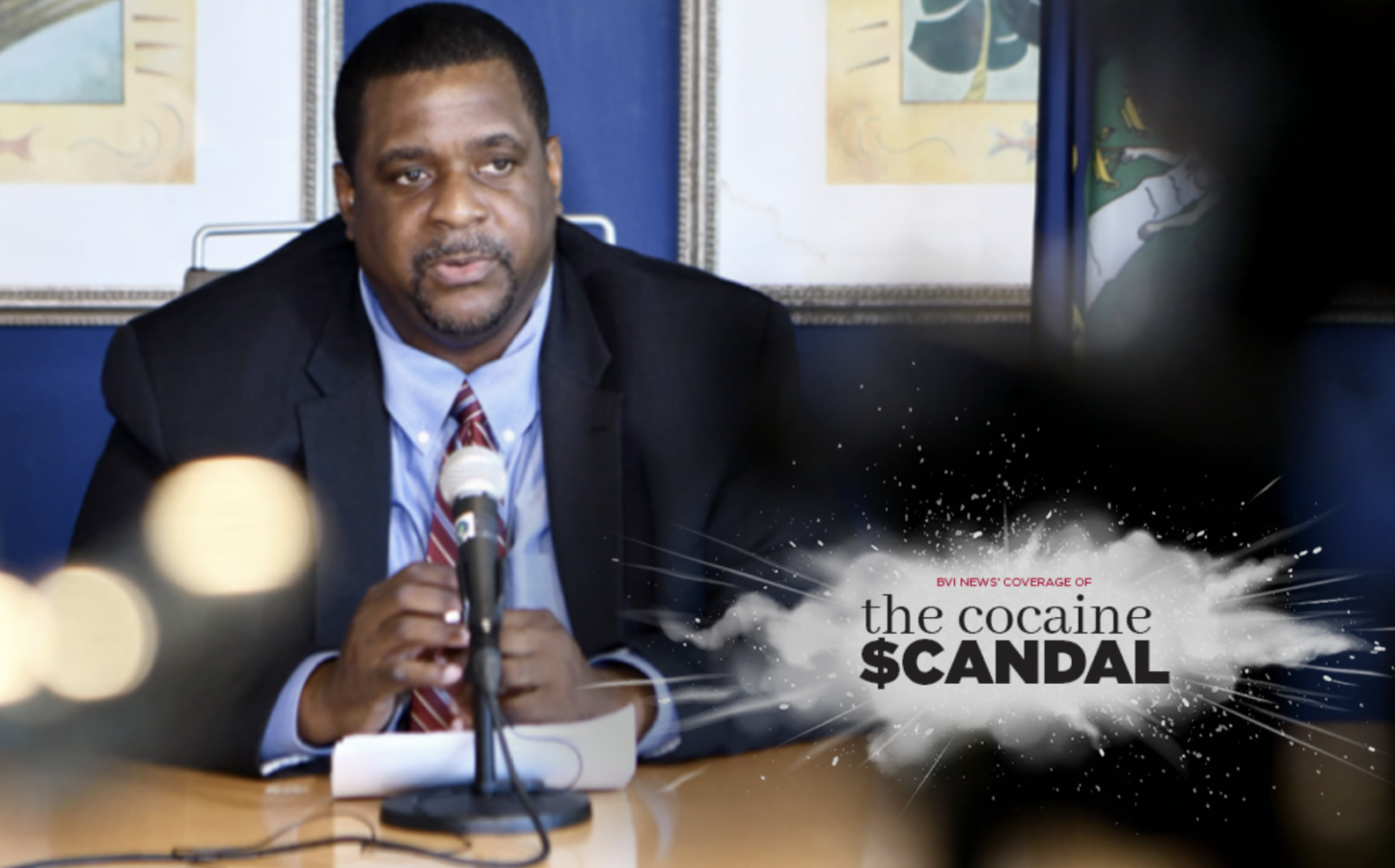
Former Premier Andrew Fahie has filed an appeal challenging his United States conviction, arguing that the government’s sting operation involved a substance that “would never test positive” for cocaine and that key information about the credibility of the confidential informant was withheld from the court.
According to the Initial Brief of Appellant filed earlier this week before the United States Court of Appeals for the Eleventh Circuit, Fahie is seeking to overturn his conviction on three primary grounds.
Fahie was convicted in February 2024 of conspiracy to import five kilograms or more of cocaine, conspiracy to engage in money laundering, attempted money laundering, and foreign travel in aid of racketeering. He was sentenced to more than 11 years’ imprisonment.
In the appeal, his attorneys argue that the trial court erred in refusing to dismiss the indictment based on what they describe as “significant government misconduct”. The brief states that a Mexican judicial officer previously found the same confidential informant used in Fahie’s case to have “credibility and reliability issues”, which led to the dismissal of corruption charges against Mexican officials.
The appeal contends that United States authorities were aware of that adverse credibility finding but did not disclose it during bond proceedings or at trial. The district court acknowledged concerns about the case agent’s conduct but declined to dismiss the charges.
A second central argument focuses on the nature of the substance at the heart of the conspiracy charge. The brief states that the confidential informant repeatedly described the shipment as liquid construction materials that had been chemically treated so they would “never, never, never” test positive for cocaine during inspections. According to the filing, the informant explained that cocaine could only be extracted after a four-day chemical process in Puerto Rico.
Fahie’s attorneys argue that because the substance could not be detected as cocaine while in transit, the government failed to prove that it contained “a detectable amount of cocaine,” as required under federal law.
The appeal also raises concerns about jury unanimity. Shortly after the verdict was delivered and the jury discharged, two jurors reportedly expressed dissatisfaction with the outcome, with one stating the verdict was not hers at the time she answered during polling. The district court conducted a limited inquiry but declined to grant a mistrial.
The appellate court has been asked to dismiss the indictment, vacate the cocaine conspiracy conviction, or order a mistrial or further evidentiary hearing on the jury issue.
Leave a Reply