

BVI seeks international funding for climate resilience
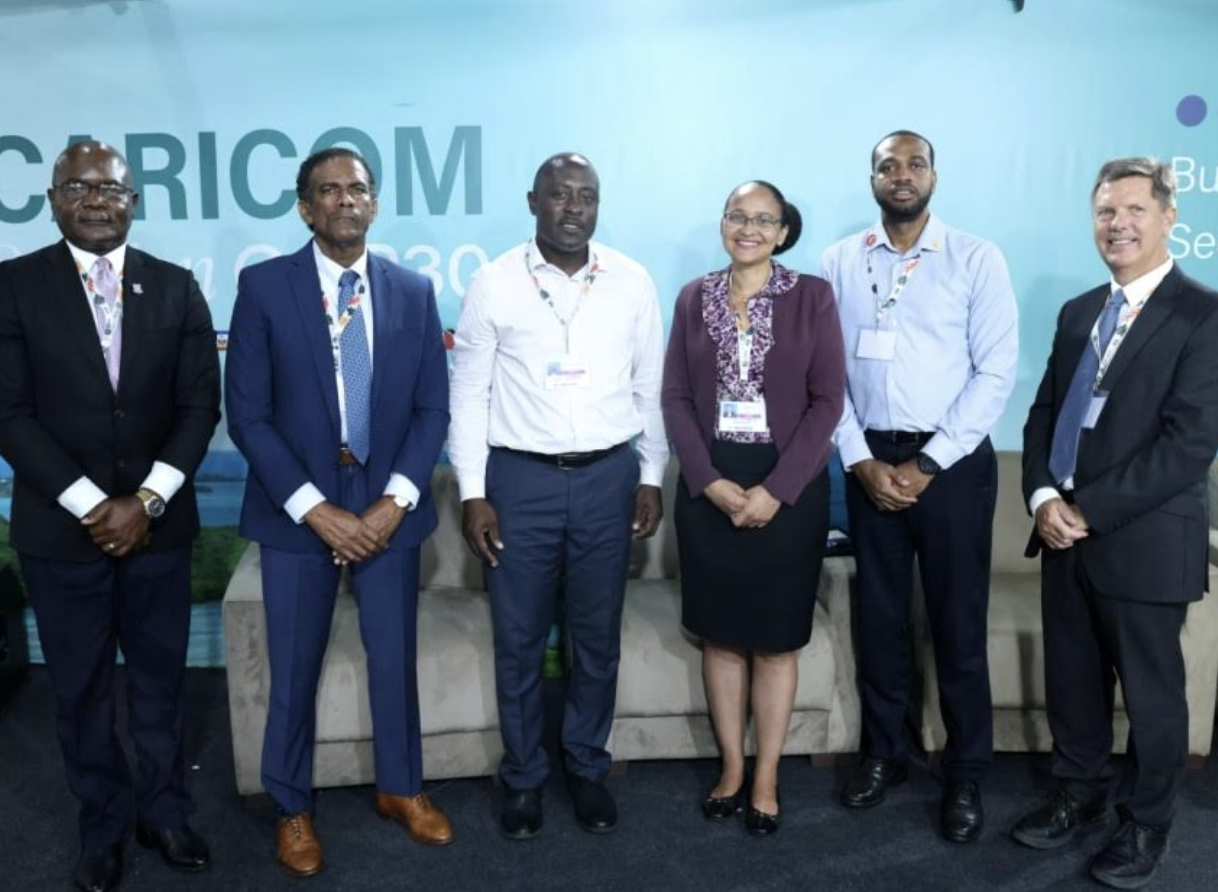
The BVI used the global stage at the recent COP30 climate conference in Brazil to urge international partners to invest in the territory’s Climate Change Trust Fund, calling it a crucial tool for protecting the territory’s environment and economy, and a model that other small islands can follow.
Climate envoy Dr Kedrick Pickering, who originally engineered the Trust Fund Act in 2015, gave the most detailed explanation of the decades-old challenge.
He told global officials that while billions exist in climate financing through institutions like the Green Climate Fund and Global Environment Facility, small islands simply can’t tap into it because the application systems are built for countries with large bureaucracies, deep technical teams and specialised administrative structures.
“Small island developing states do not have the administrative infrastructure to be able to access the funding that is available on a global scale,” Pickering said. “That was an issue back then and is an issue now. We don’t have the necessary human resources to access those funding.”
Pickering said the result is that the islands most vulnerable to hurricanes, sea level rise and coral decline are often the least able to secure the financing needed to prepare for them.
He said this gap inspired the BVI to design its own national mechanism — the Virgin Islands Climate Change Trust Fund — so that donors have a clear, credible structure they can channel funds through.
“We’ve done our part to advance as far as we can go,” he said. “We’ve built the structure. We’ve capitalised it ourselves. Now we need partners to carry it forward.”
The BVI has already raised about $5.5 million for the fund through the mandatory $10 environmental levy charged to all visitors. Pickering noted that this self-starting approach mirrors the territory’s history of building environmental institutions from the ground up, dating back to the Rockefeller-era creation of the National Parks Trust.
But he told the COP30 audience that for the Trust Fund to reach its full potential, and for the BVI to properly protect its environment, coastlines and tourism-based economy, it must now attract outside investment.
“We are saying to you, we have done as much as we can do… but we need help to take us to the next level,” he told donors.
Other officials reinforced Pickering’s argument by highlighting how difficult it is to finance recovery after major disasters. Caribbean Development Bank President Daniel Best added that territories like the BVI face an even harder climb than independent small states because they are shut out of some global funding windows entirely.
“Despite our vulnerability, access to predictable, adequate, and direct climate finance remains a persistent challenge,” he said. “Our survival depends on addressing this.”
The Trust Fund — legally independent, nationally owned and guided by strict international standards — is designed to fix that by serving as a ready-made vehicle for climate investment. It will finance projects such as mangrove restoration, coastal defences, renewable energy systems, flood mitigation for Road Town, and resilience loans for small businesses.
After the presentation by Pickering and other BVI delegates, the BVI’s climate fund secured commitments from the Caribbean Development Bank, the UN Resident Coordinator’s Office, and several regional climate groups interested in building local capacity and supporting the BVI’s renewable energy transition.
For Pickering, however, the core message remained simple: small islands cannot wait for global systems to fix themselves.
“Accessing those funds means investing in environmental sustainability in more ways than I can begin to imagine,” he said. “We have the mechanism. Now we need the support.”
Copyright 2026 BVI News, Media Expressions Limited. All Rights Reserved. This material may not be published, broadcast, rewritten or distributed.

















It’s a pity that a few dollars out of the $5.5 million raised through the mandatory $10 environmental levy, is not used to improve the quality of the built environment.
It is a mess that is staring Virgin Islanders in the face, and one that has to be lived with here and now.
The survival of the worth of these islands equally depends on eradicating the brick and mortar spoil created by man.
AFTER ” AGRICULTURE ” IS ONE THE MOST IMPORTANT FOUNDATION IN EVERY COUNTRY ~ ANDAFTER WHAT HE DID TO IT , ITS SHAMEFUL • AIN’T GOING ANYWHERE,. AND IF THE PEOPLE DIDN’T GET THE MESSAGE AND STILL PUTTING THEIR TRUST & FAITH IN THIS WANNABE , THEN AS CSC SAID ” WE FRIGGED ” THE COVID VACCINE IS ANOTHER EXAMPLE / CHECK IT OUT YOURSELF
Kedrick come back through the window to finish kill what he didn’t kill when he was the minister? Why do we keep recycling these same people. Kedrick was the minister for climate and agriculture etc. He ain’t get nothing do but we bring him back as a special envoy? If he couldn’t get it done for himself you think he could get it done under somebody else? Do we think in this place?
This the same bvi that got sewage water leaking into road town and east end? hmmmm interesting #BankOfAsia
With all the pay plus cars ,housing money for the premier amounts to close to half a million dollars the BVI should not need to ask for a hand out.
How could you ever think of independence and still seek
for money?
So its nothing to do with climate mitigation. Just asking for a handout when we get hit by a disaster, since there is almost nothing we can do here to affect climate change, or prevent flooding and wind damage.
Money. They want more money.
The people of the VI and the infrastructure will never get to see it.