
CARICOM urged to implement better standards for electric vehicles
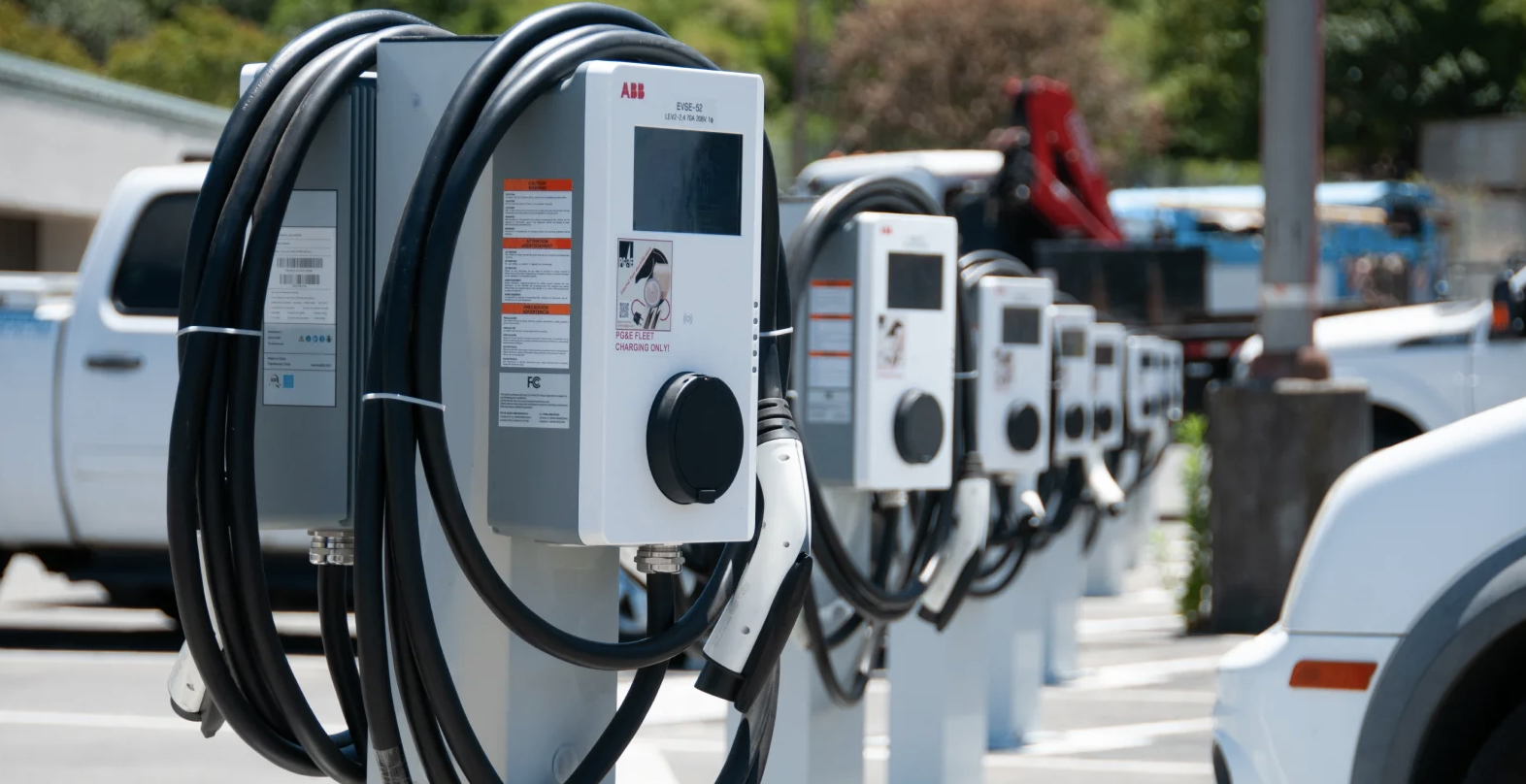
As electric vehicle (EV) adoption continues to grow across the Caribbean, regional officials are being urged to establish stronger and more harmonised standards for EV charging infrastructure to ensure safety, reliability and interoperability across CARICOM member states.
The call came during a recent CARICOM forum that examined the challenges and opportunities surrounding EV charging systems throughout the region.
Delivering the feature presentation, Director of Ziklag Consulting Group Company Limited, Dr. Soren Maloney, said CARICOM countries are moving at different speeds in developing standards for EV charging infrastructure, creating challenges for regional compatibility.
According to Dr. Maloney, small technical workforces, limited budgets and insufficient regulatory capacity have made it difficult for some countries to establish comprehensive standards. Drawing on Guyana’s experience, Dr. Maloney outlined several measures that countries should adopt when developing EV charging standards.
These include establishing clear rules governing the entire lifecycle of charging facilities, from planning and installation to operation, inspection and eventual decommissioning.
He said countries must determine where charging stations can be located, who is qualified to install them, who will oversee their operation and what safety measures must be in place. Dr. Maloney also stressed the importance of broad stakeholder consultation. He explained that Guyana developed draft standards, circulated them for written feedback, conducted face-to-face consultations and provided training before finalising the framework.
He said capacity-building should be incorporated into the process to ensure regulators, technicians and other stakeholders understand how to implement and enforce the standards effectively.
The consultant further warned against simply copying standards developed in larger countries.
“You can’t cut and paste standards from other regions or countries,” he said, noting that standards must reflect local conditions, market maturity and the scale of EV adoption within individual Caribbean nations.
Dr. Maloney also cautioned against adopting standards that lock countries into a specific technology, arguing that flexibility will be essential as the EV industry continues to evolve. CARICOM officials said harmonised standards would help ensure EV charging systems work seamlessly across member states while supporting the region’s broader transition toward cleaner transportation and energy systems.
Copyright 2026 BVI News, Media Expressions Limited. All Rights Reserved. This material may not be published, broadcast, rewritten or distributed.
















Is there one on Anegada?
In the BVI all electric vehicles must be able to operate without electricity just like all households have to. No reason for them to have power when most of the time I don’t.
Before I get a thumbs down, just remember everything comes from something whether drilling for oil or destroying nature for rare earth minerals to manufacture the electric/digital revolution.
Electric vehicles (EVs) look clean on the surface, like a polished sheet of glass. But underneath that sheen is a system still wrestling with physics, infrastructure, and economics. I’ll strip it down honestly, then set it beside fuel vehicles so the contrast is fair rather than romantic
The Real Cons of Electric Vehicles
Battery dependency is the core vulnerability
EVs are not “fuel independent.” They are mineral dependent.
Lithium, nickel, cobalt, and graphite are concentrated in limited regions.
Mining is environmentally disruptive and geopolitically sensitive.
Supply chains are fragile and price volatile.
A single battery pack is basically a compressed geopolitical argument on wheels.
Charging time is still fundamentally slower
Even with fast charging:
EV: ~20–40 minutes for a meaningful charge (fast chargers)
Fuel car: ~3–5 minutes full refill
That difference sounds small until you’re traveling, working, or stuck in a queue. Time is the invisible tax EVs still pay.
Charging infrastructure is uneven and inconsistent
This is one of the biggest real-world pain points.
Urban areas: decent coverage
Suburban: patchy
Rural/highway corridors: unreliable gaps still exist in many regions
Even when stations exist:
Some are broken
Some are occupied
Some are incompatible or require different apps/networks
It’s not one unified system like fuel stations. It’s more like fragmented islands of electricity.
Range anxiety is still psychologically real
Even if modern EVs can go 250–400+ miles:
Cold weather reduces range significantly
Highway speeds drain faster than expected
Battery degradation reduces range over time
People don’t just calculate range. They feel it. That uncertainty changes driving behavior.
Battery degradation and replacement cost
EV batteries don’t “die suddenly” often, but they do fade.
Typical degradation: gradual loss over years
Replacement cost: still very high (though dropping over time)
Even if rare, the idea of a major future expense sits in the back of ownership psychology like a shadow.
Grid pressure and hidden emissions
EVs don’t eliminate emissions. They shift them.
If electricity comes from coal or gas → emissions are relocated, not erased
High EV adoption increases grid demand
Poorly upgraded grids can struggle with peak charging loads
So the “clean” label depends heavily on how clean the grid actually is.
Repair complexity and cost
EVs have fewer moving parts, yes—but:
Repairs are often specialized
Battery systems are tightly integrated
Some damage leads to full module replacement instead of simple fixes
Independent mechanics often cannot service high-voltage systems easily.
Charging speed bottlenecks under scale
A gas station can refuel dozens of cars per hour per pump.
A fast charger handles far fewer.
At scale, EV infrastructure requires more space, more grid capacity, more coordination than people initially assume.
Charging Stations: The Hidden Weak Link
Charging stations are not just “EV gas pumps.” They are grid-connected digital infrastructure.
Key problems:
Reliability issues
Out-of-service chargers are common in many networks
Maintenance is inconsistent
Software/payment failures occur frequently
Fragmentation
Multiple networks, apps, and payment systems
No universal seamless system everywhere
Queue congestion
Peak times create bottlenecks
Unlike fuel stations, dwell time is long, so queues spiral
Location bias
Installed where it is profitable, not always where it is needed
⛽ Now the Fair Comparison: Fuel Vehicles vs EVs
⚖️ Fuel Vehicles (ICE – Internal Combustion Engines)
Strengths
Fast refueling (dominant advantage)
Mature infrastructure globally
Predictable range and behavior
Easier repair ecosystem (especially older models)
Lower upfront cost in many markets
Weaknesses
Continuous dependence on oil supply chains
High emissions (CO₂, NOx, particulates)
Engine complexity leads to long-term maintenance (oil, transmission, exhaust systems)
Fuel price volatility tied to global conflict and markets
⚡ EVs
Strengths
Lower operational emissions (especially on clean grids)
Fewer mechanical parts → less routine maintenance
High efficiency (electric motors waste far less energy than combustion engines)
Quiet operation and smoother torque delivery
Weaknesses
Charging time vs fuel time gap
Infrastructure inconsistency
Battery cost and mineral dependence
Grid dependency
Range variability under real-world conditions
The Honest Bottom Line
Fuel cars are logistically mature but environmentally costly.
Electric cars are environmentally promising but infrastructurally immature.
Right now, neither is “perfect.” They are two imperfect answers to different parts of the same problem:
One solves energy storage and convenience brilliantly but pollutes heavily.
The other reduces tailpipe emissions but shifts pressure to grids, mining, and infrastructure.
If you strip away marketing language, EVs are not a finished revolution. They are a transition technology—powerful, necessary, but still under construction.
And fuel vehicles are not obsolete relics yet—they are still the most frictionless long-distance mobility system humans have ever built.
I t=dont think the Caribbean is ready for electric cars even though they are the future
In 1884 English inventor Thomas Parker built the first known electric car. It was supposed to the future then. Whilst we have more efficient methods to move a motor vehicle, EV’s will always be a fad.
Someone wants us to be buying new electric cars.