


Is solar a genuine solution for struggling households?
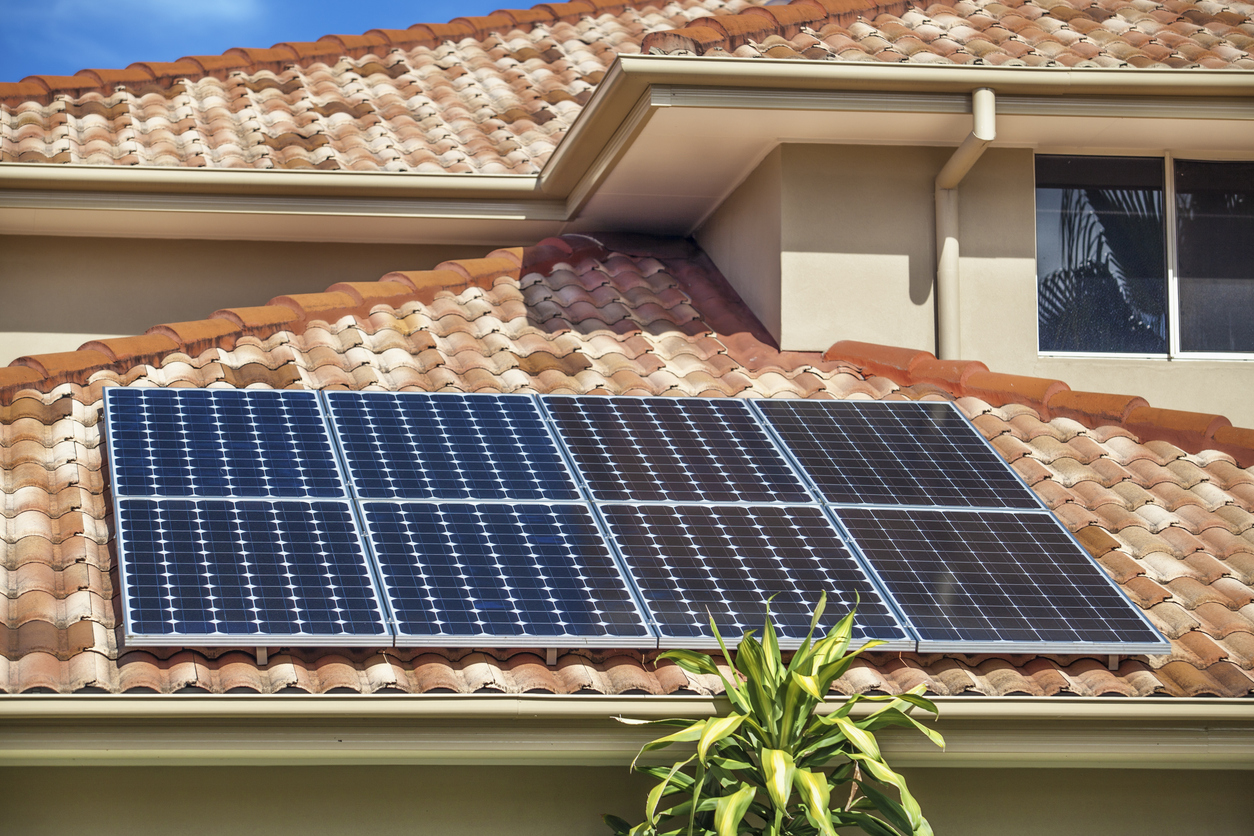
The government is promoting subsidised solar systems as a long-term answer to high electricity bills, but delays in installing the systems could prevent struggling households from receiving immediate relief.
Communications and Works Minister Kye Rymer said the territory must reduce its dependence on imported diesel, which leaves electricity customers exposed to international fuel-price increases.
“Repeatedly subsidising imported diesel is not a sustainable solution. The long-term answer is to reduce our dependence on imported fuel, and that is why our renewable energy transition is critical,” Rymer stated during a press conference on the Government Fuel Subsidy Assistance Programme.
Under the Solar Technology Energy Programme (STEP), the government pays half the estimated $10,000 cost of a standard residential grid-tied solar system.
The customer remains responsible for the other $5,000, which Rymer said would be provided as a loan and repaid through the savings generated by reduced electricity bills.
“You won’t even feel the repayment because it comes from the money you are no longer spending on diesel-generated power. Once the loan is paid off, all those monthly savings go directly back into your pocket, lowering your bill even further for decades to come,” Rymer stated.
Substantial savings
BVIEC General Manager Dr Neil Smith said the programme had already delivered substantial savings for some participants. “The individuals who have participated in that programme thus far, their bills have dropped in many cases by over 50%,” Smith stated.
BVIEC has previously published figures demonstrating savings through its net-billing arrangement. The corporation reported in 2021 that the Bregado Flax Educational Centre recorded a monthly bill of $485.64 after installing a renewable energy system, compared with the $1,042.19 it would ordinarily have paid. The institution saved $556.56 that month, according to BVIEC.
STEP was introduced in April 2024, and the government signed installation contracts for an initial 21 customers in February 2025. BVIEC covers the initial equipment and installation costs, while savings from the systems go towards recovering the customers’ share of the expense.
Grid-tied systems do not take participating households completely off the BVIEC network. The corporation supplies electricity when the solar panels do not generate sufficient power, while customers send excess electricity to the grid when their systems produce more than they consume.
However, Rymer acknowledged that installation work had not kept pace with applications.
“The demand for solar systems under the Solar Technology Energy Programme has increased dramatically, but we must be transparent. The pace of installation has not kept up with the demand,” Rymer stated.
Smith said BVIEC was seeking additional installers and hoped to complete a substantial number of installations before the end of 2026. He said the corporation wanted to clear the existing applications by the end of 2027.
Copyright 2026 BVI News, Media Expressions Limited. All Rights Reserved. This material may not be published, broadcast, rewritten or distributed.


















solar isn’t affordable for the average household unless it is planned out
The open ended annual charge for being grid linked ( government charging for the sun being out )which nullifies any savings the average household would make and the fact you only give credit not cash at a very low kwhr rate when excess power returns to grid makes it pointless . You also need to consider the portability or protection of panels and systems during hurricane events the risk is yours alone . When Government gets rid of the thieving annual sun tax connection charge that can be altered upwards and returns cash for excess at an equitable kwhr rate it begins to make economical and eco friendly sense.
Add an electric vehicle which can also output to the house as well as support your house bank set up an independent system along side normal connection add a switch over isolation switch , don’t fall for the con government is helping ignore the worthless grid connection which in fact taxes you run vehicle fuel for free minimal house costs.
Here’s the critical read on STEP, straight up.
The utility death spiral is baked in. Smith says participants’ bills have dropped in many cases by over 50%. Every one of those installations is revenue BVIEC loses permanently, but BVIEC’s costs don’t fall 50% the poles, wires, substations, and the diesel plant that must still stand ready for cloudy days and nighttime all cost the same. So the fixed costs get spread across a shrinking pool of paying customers: renters, low-income households, and anyone who can’t install solar. Their rates go up to cover the gap, which pushes more people who can afford solar to jump, which shrinks the pool further. That’s the death spiral, and every jurisdiction that’s run net-billing at scale has hit it. The irony: the people the programme claims to help “struggling households” are exactly the ones who’ll end up subsidizing the grid for those who got panels. Expect a “grid access fee” or demand charge within a few years, which will retroactively wreck the savings math everyone signed up under. One of the commenters on that article already flagged the open-ended connection charge nullifying savings that’s the mechanism, and government controls the dial.
The financing pitch is doing a lot of work. “You won’t even feel the repayment because it comes from the money you are no longer spending” that only holds if the system performs at projection, the tariff structure doesn’t change, the connection fee doesn’t rise, and nothing breaks. A grid-tied inverter failure, a tripped system nobody notices for two months, salt-air corrosion on connectors any of those and you’re paying the loan and a full BVIEC bill. There’s also no mention of who owns the risk if a system underperforms: the customer still owes the $5,000. And contracts were signed for an initial 21 customers in February 2025, with installations not keeping pace and a queue they hope to clear by end of 2027 so people in crisis now are being sold a solution with a two-plus-year waitlist.
The renter/landlord wall. This is probably the biggest structural flaw and the article doesn’t touch it. A huge share of BVI households and nearly all small businesses rent. A tenant cannot bolt panels to a landlord’s roof the lease won’t allow it, the tenant won’t invest $5,000 in an asset they walk away from, and the loan-repaid-through-savings model breaks completely because the savings accrue to whoever holds the BVIEC account while the asset stays with the building. Landlords have no incentive either: they don’t pay the tenant’s power bill, so the “savings” mean nothing to them, and many are already stretched servicing bank loans on the property. There’s no split-incentive fix in STEP no landlord tax credit, no on-bill financing tied to the meter rather than the person, no community/shared-solar option where renters buy into an offsite array. Without one of those, this is a homeowners-only programme dressed up as household relief.
Panels are half a system. Grid-tied with no battery means the moment BVIEC goes down and it goes down your panels shut off too (anti-islanding). So the “energy independence” framing is misleading: after a storm, a STEP household is as dark as everyone else. Batteries fix that but roughly double the cost, and the programme’s $10,000 figure is clearly panels-plus-inverter only. Which leads to:
Homes as unpaid grid assets. Under net-billing, excess power goes to BVIEC as credit, not cash, typically at a rate well below retail. So the household finances the hardware, carries the roof risk, does the maintenance and BVIEC gets distributed generation capacity it didn’t have to build, valued on its own terms. That’s a microgrid built on private roofs without microgrid compensation: no capacity payment, no fair export rate, no payment for the grid-stabilization value. If government wants distributed generation, the honest structure pays for it; this structure extracts it.
Hurricane exposure. This is a Cat-5 zone. Questions with no visible answers: Are STEP installations engineered to Irma-level wind loads, and who certifies that? Does home insurance cover the array or does adding one raise premiums or void coverage in a market where insurance is already brutal post-2017? Panels that tear loose become airborne blades; who’s liable when your panel goes through a neighbour’s window? After a storm, is there local capacity to inspect and recommission hundreds of damaged systems, when they can’t even keep up with installs in calm weather? A destroyed array with an outstanding $5,000 loan attached is a genuinely worse position than never having joined.
The environmental accounting is selective. Fair point on hypocrisy: panels and lithium batteries carry real extraction costs cobalt, lithium, silver, rare earths, mined and refined mostly with fossil energy, often with ugly labour and ecological footprints. Panels have a ~25-30 year life and batteries maybe 10-15; the BVI has no e-waste recycling stream, so end-of-life panels and degraded battery banks will pile up in a small territory with limited landfill. None of that makes diesel clean diesel is worse per kWh over the lifecycle but “renewable” isn’t “impact-free,” and a programme that never mentions decommissioning or disposal hasn’t done full-cycle planning.
What’s missing that would make it honest: a published, locked export rate and connection-fee schedule so the savings math can’t be moved after people sign; a landlord/tenant mechanism (meter-attached on-bill financing or shared solar); battery or at least storm-resilience standards as part of the spec; an insurance framework negotiated territory-wide; a stated plan for how BVIEC’s fixed costs get recovered as penetration rises, so non-participants aren’t blindsided; and an end-of-life disposal plan.
The core idea cutting diesel dependence is sound. The design, as described, front-loads the benefits to homeowners who can wait two years, back-loads the costs onto renters and the grid’s remaining customers, and leaves the storm and end-of-life risks sitting entirely on the household.
I’m not totally dismissing that we need alternatives, but let’s be a bit more transparent.
The wealthy will be forced through frustration to disconnect from water, power and travel , they can afford it ,private cisterns, solar and charter flights will ease their inconvenience . The utility companies then will be unable to bill them the remaining renters and homeowners of which there are too few to will be unable to sustain the existing utilities even as they are!
People should be free to decide if they want to connect their systems to the electricity grid or not. Not be forced to bow to a master who really would prefer they went on paying the worlds most outrageous charges.