
Rosan calls for action on BVI’s housing crisis
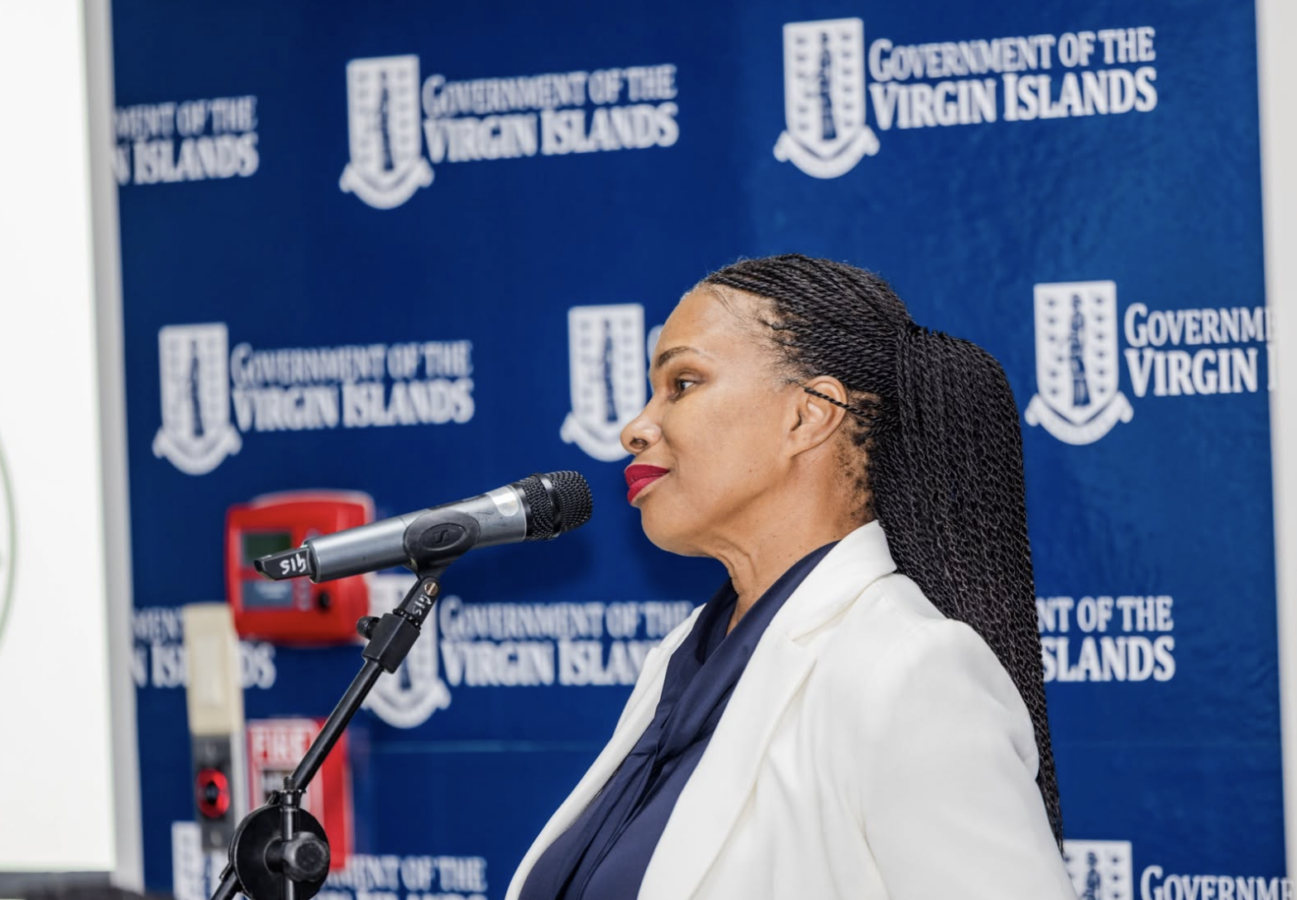
Political commentator Cindy Rosan is urging leaders and citizens to confront what she described as a growing housing crisis in the BVI, warning that the territory is failing to plan for population growth while approving thousands of work permits each year.
Speaking on her Morning Facts show, Rosan said the housing shortage is being driven by a combination of family land disputes, limited access to financing, slow government approvals, inadequate planning, and a lack of modern housing policies.
“We have a real housing crisis at the moment that is going to get worse,” Rosan warned. “The jobs are there, but is the infrastructure there? Are there homes or apartments available for these people to actually live in?”
According to Rosan, one major obstacle is the amount of land tied up in long-running family disputes.
“There’s a lot of fight with family land in the BVI, and this has gone on for decades,” she said. “That brings you to a limited amount of property to do anything with.” She also criticised local banks, claiming many Virgin Islanders struggle to access financing needed to develop land or build homes.
“I’m going to be very honest and say that the banks look at locals and dark-skinned people and determine whether they’re gonna give a loan or not. So you have that against you,” Rosan said. “Some of us do have land that we can develop apartments or whatever, but you can’t — you’re stuck.”
Government bureaucracy
Even when developers have funding, Rosan argued that government bureaucracy creates further delays. Rosan also questioned whether government officials are adequately considering housing needs when issuing work permits.
“When we’re thinking, ‘Okay, we’re going to pass 2,000 work permits this year,’ do you have some place for them to stay?” she asked. “Because when they get here, they need to live somewhere.”
She argued that the housing challenge extends beyond migrant workers and affects young Virgin Islanders seeking to move out on their own, start families, or purchase their first homes.
No space for single-family homes
Rosan further contended that the territory must rethink its preference for standalone homes, saying there simply is not enough land to sustain that model.
“The BVI does not have enough land for everybody to have their own little personal space,” she said. “We have to get out of this mindset that I need to live by myself in my own space when I’m purchasing something.”
She suggested greater emphasis on condominiums, townhouses, and higher-density developments, while also calling for long-awaited landlord and tenant legislation to provide protections and clear rules for both property owners and renters.
Copyright 2026 BVI News, Media Expressions Limited. All Rights Reserved. This material may not be published, broadcast, rewritten or distributed.
















She hates locals we don’t want to hear a thing from this low life
You are a vile disgusting person. To come on here calling people such names is beyond the pale. It shows you ARE the low life.
You can disagree with someone without having to resort to gutter. Fix yourself and have some decency and class, and you can downvote what I said to your hearts content. Im matters to me none.
Cindy is right, there’s far too much red tape strangling this country. And it seems intentional. The system feels designed to pick winners and losers, and the worst part is that it’s not even the leaders of the major parties pulling the strings. It’s a deeply embedded practice that risks crushing the middle class.
We’ve seen this kind of pattern over, and over in the past, when complex regulations and political favoritism often benefited powerful industrial interests (The Club Members) while smaller businesses and workers struggled. History shows that when systems tilt this way, the middle class is usually the one that pays the price.
It’s all by design.
High rents do not affect everyone equally. Many locals already own their homes, and many are also landlords. In several cases, these properties carry little or no mortgage burden, meaning rental income is not simply covering debt, but generating significant profit after maintenance, insurance, and basic upkeep.The burden falls most heavily on expatriate workers, Caribbean nationals, Filipino workers, and the wider working class, many of whom sustain the very economy from which others benefit. Yet there remains too little urgency to ease their burden.
The rental expectations created during the height of the financial services era, when $5,000 and $6,000 rents were common among professionals, cannot reasonably be imposed on workers earning near minimum wage, but many times is . That is not a sustainable housing model; it is short-term thinking.Affordable housing is not charity. It is economic infrastructure. It improves quality of life, strengthens the workforce, supports families, and creates a more stable and productive economy.
You know, I genuinely applaud Cindy for her grit, resilience, and sheer determination. Despite the slapdowns, the derogatory names, the labels people love to hurl at her, she keeps showing up. She takes the blows and still soldiers on.
Sure, there are moments when she gets it wrong (she’s human) but more often than not, there is a message in what she’s saying. And the funny thing is, so many of her loudest detractors have absolutely nothing to offer in return. No ideas, no solutions, no substance. Just name calling and mudslinging, as if that somehow counts as contribution.
She from here? You all can’t find an attractive looking pic or she just not photogenic?