


Historian recounts BVI’s legacy of agriculture, land ownership
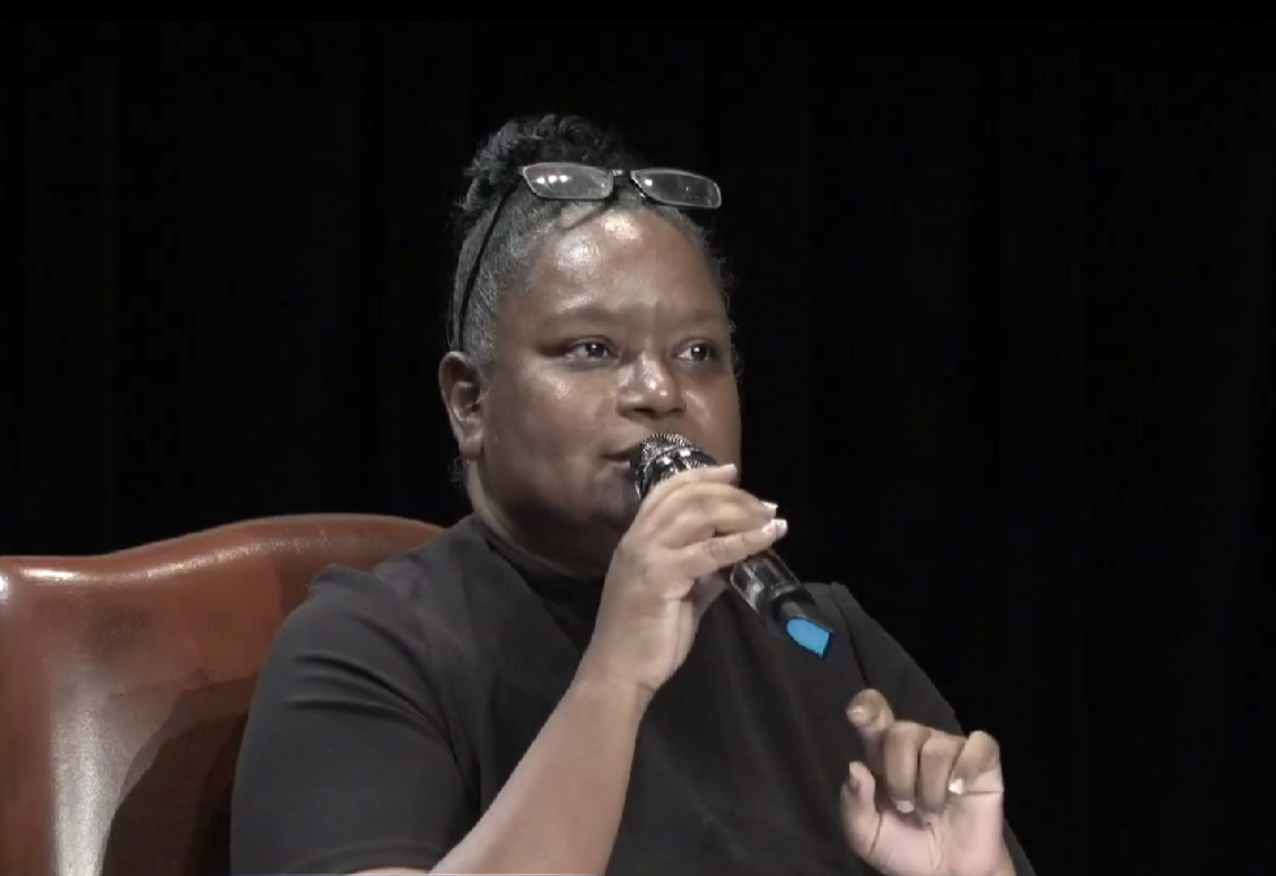
Director of Culture Dr Katherine Smith
Historian and Director of Culture Dr Katherine Smith is calling on Virgin Islanders to reflect on a powerful but often overlooked legacy — that both free and enslaved people in the territory were deeply rooted in land ownership and agriculture long before emancipation.
Speaking at a recent forum on the annual Emancipation Festival, Dr Smith traced the territory’s early history, beginning with the Indigenous presence, the arrival of Christopher Columbus in 1493, and the eventual settlement of the English in the late 1600s with enslaved Africans.
Dr Smith explained that by the 1740s, sugar plantations had taken root and by the 1750s had overtaken cotton. But that dominance was short-lived. “In 1819, there was a devastating hurricane,” Smith noted. “The sugar plantations were destroyed, and the planters left, and they did not return. They left behind the ones we celebrate during Emancipation Festival — our ancestors.”
What followed, she suggested, is one of the most defining yet underappreciated chapters of Virgin Islands history.
During enslavement, she explained, the economy was divided between external plantation interests and a vibrant internal market system sustained largely by free blacks and the enslaved population.
“The external economy was dominated by planters and free blacks. We always had a free black population,” Smith said. “And the internal economy here was dominated by free blacks and our enslaved population.”
Legacy of agriculture and land ownership
She added that historical accounts suggest the territory depended heavily on the provision grounds cultivated by enslaved people. “I think I remember reading excerpts that nobody would eat in the territory if these enslaved populations didn’t bring their goods to the market,” she said, referring to what is now the Old Administration Building area in Road Town.
Citing historian Michael O’Neal, Smith cited evidence that black people in the Virgin Islands always enjoyed some level of land ownership – something that was quite different from their counterparts in the rest of the Caribbean. “The blacks in the Virgin Islands, while still in bondage, had begun to acquire many of the attributes normally associated with freedmen, particularly as regards land rights, and property ownership,” she said.
By 1863, she told the audience, reports to England indicated that “the majority of the land was in the hands of the ex-slaves.” That reality, she stressed, is a unique and defining feature of Virgin Islands history.
“And by 1900, these same ex-slaves — our ancestors that we should know so dearly during the Emancipation Festival — had managed to convert all of these plantations into the beginnings of the villages we know today,” Smith said. “Into all the farms that they had, we entered into an era of self-sufficiency and agriculture, where we basically made everything that we needed to eat, we grew it.”
That era of self-reliance stands in stark contrast to modern times.
Today, the BVI imports the vast majority of its food, with local agriculture operating on a limited scale. Across the Caribbean, public health experts continue to link rising rates of diabetes, hypertension and certain cancers to diets dominated by imported, processed foods — sparking renewed calls for greater local food production and food security in the territory.
At the same time, there is growing concern that Virgin Islanders are being priced out of land ownership, historically the primary vehicle for wealth building in the territory. Rising real estate values and shifting economic priorities have led some families to sell ancestral lands, while younger generations show less interest in farming or maintaining family holdings.
Against that backdrop, Smith’s remarks served as both celebration and warning: land has always meant freedom for Virgin Islanders – a tool used to build health and wealth. That foundation must not be forgotten even as the territory navigates modern economic and social pressures.
Copyright 2026 BVI News, Media Expressions Limited. All Rights Reserved. This material may not be published, broadcast, rewritten or distributed.














FACTS BUT ALL THEY WANT IS MONEY NOW
WE REALLY LOST OUR WAYS
These historians tend to forget that majority of the population are treated as outsiders when some of them has been hear doing hard labour along with everybody else. Keep dwelling on half story story. Time to update all you history.
The present crop of leadership is so disconnected from reality that they continue o lead us further and further from self sustenance and food security.
These so called leaders are doing the Virgin Islands a most horrific dis-service and couldn’t care less.
well my Poli.Historical Friend, that is what we do in modern day Virgin Islands, we get an inch and take a yard.
So we ancestors made way and designated sections of our inherited plantations for the developmental dwellings of our generations then and to come, and we allowed the splurge of our economy to re-enslave our prime lands for the establishment of today’s bvi where all such farming is little to none on a national level. It was not what they intended for our fruitful lands……..
Some sources related to Dr. Smith’s lecture:
-Vernon Pickering 1983. Early history of the British Virgin Islands: From Columbus to emancipation. https://www.amazon.com/Early-history-British-Virgin-Islands/dp/8885047122/
-Michael O’Neal 2012. Slavery, Smallholding and Tourism: Social Transformations in the British Virgin Islands. https://www.amazon.com/Slavery-Smallholding-Tourism-Transformations-British/dp/1610271181/
Crown lease lands in bvi